Our workshop in Ecuador is preparing the 2027 color range for our preserved roses. This year, we changed the way we work in the lab. Here is what is happening behind the scenes.
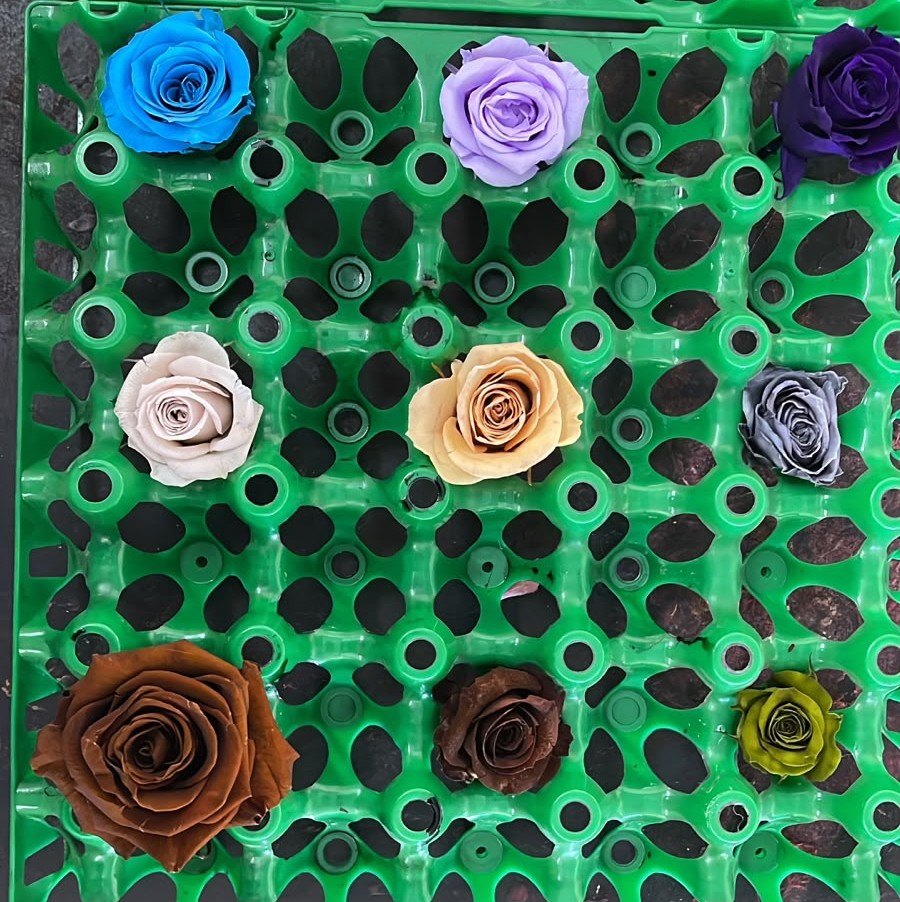
A faster way to develop new colors
We developed a new process for applying color to preserved roses. It lets us work in batches:
- 10 to 15 new shades tested in a single day
- Each shade checked against its Pantone reference before it moves forward
Working this way, we can compare many colors side by side, adjust them quickly, and keep only the ones that match their target.
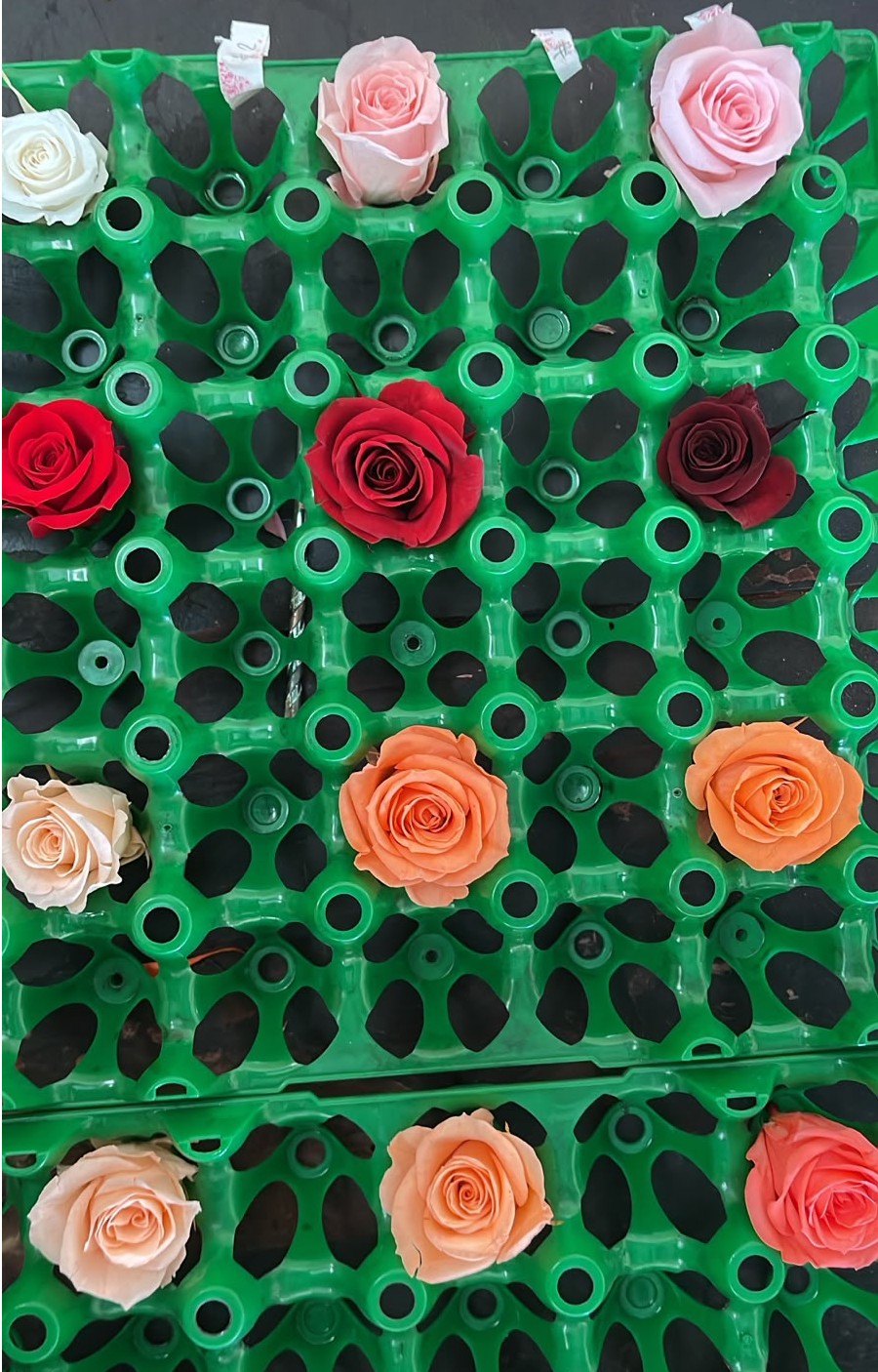
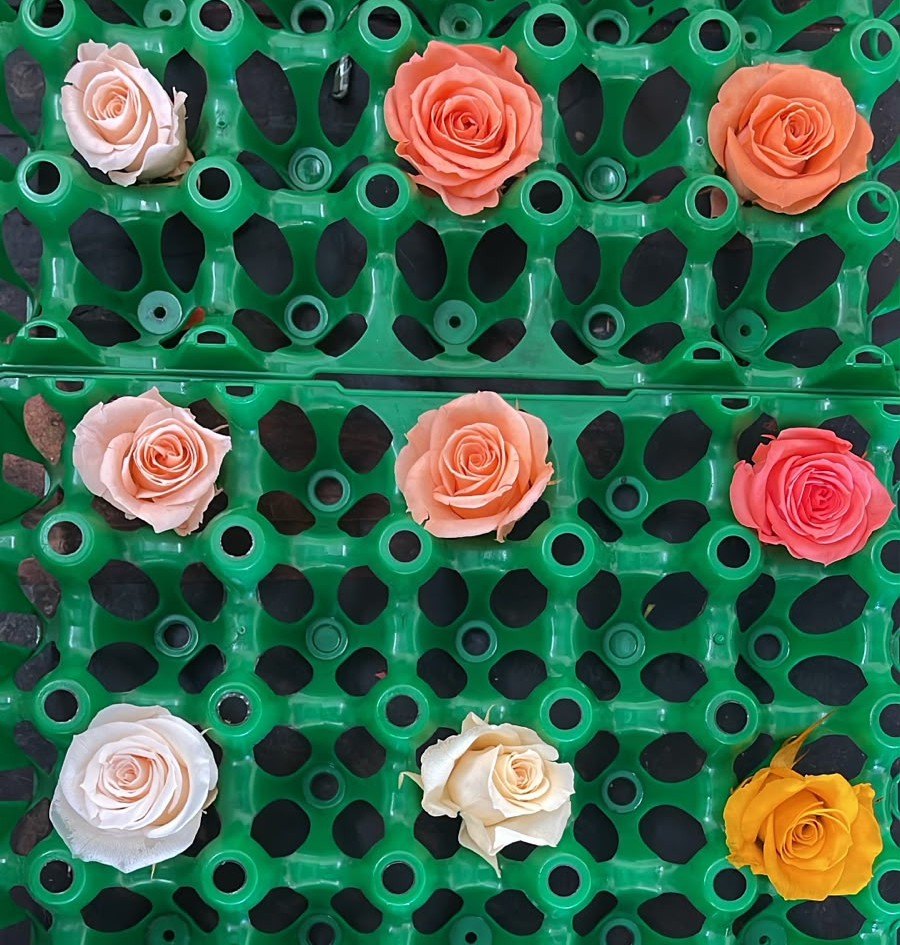
Brighter, not shinier
In parallel, we are working on a new coloring method using classic dyes. Our goals:
The challenge is in that last point. We want a rose that is more radiant than what the preserved-rose market offers today, while keeping the natural look of the petal. Luminous, but not shiny.
No retouching. The photos in this article are our real trials, on our production trays. They are completely unretouched and were taken with a basic phone. What you see is the real color.
Color first, not shape
We work with several rose varieties, so these trials are not about the shape or size of the flower. They are about the color: its tone, its brightness, and how faithfully it matches its reference.
We will share more results in the coming months as the 2027 range takes shape.
Planning a specific color for 2027?
If you are a florist, a wholesaler or a distributor, tell us which colors you are looking for. We will be glad to talk.